V5 is here: multi-sensor, Wi-Fi, and clean power at last
The biggest jump from V4 to V5 wasn't a new sensor. It was a tiny piece of plastic called a 7805 voltage regulator. Boring name. Huge difference.
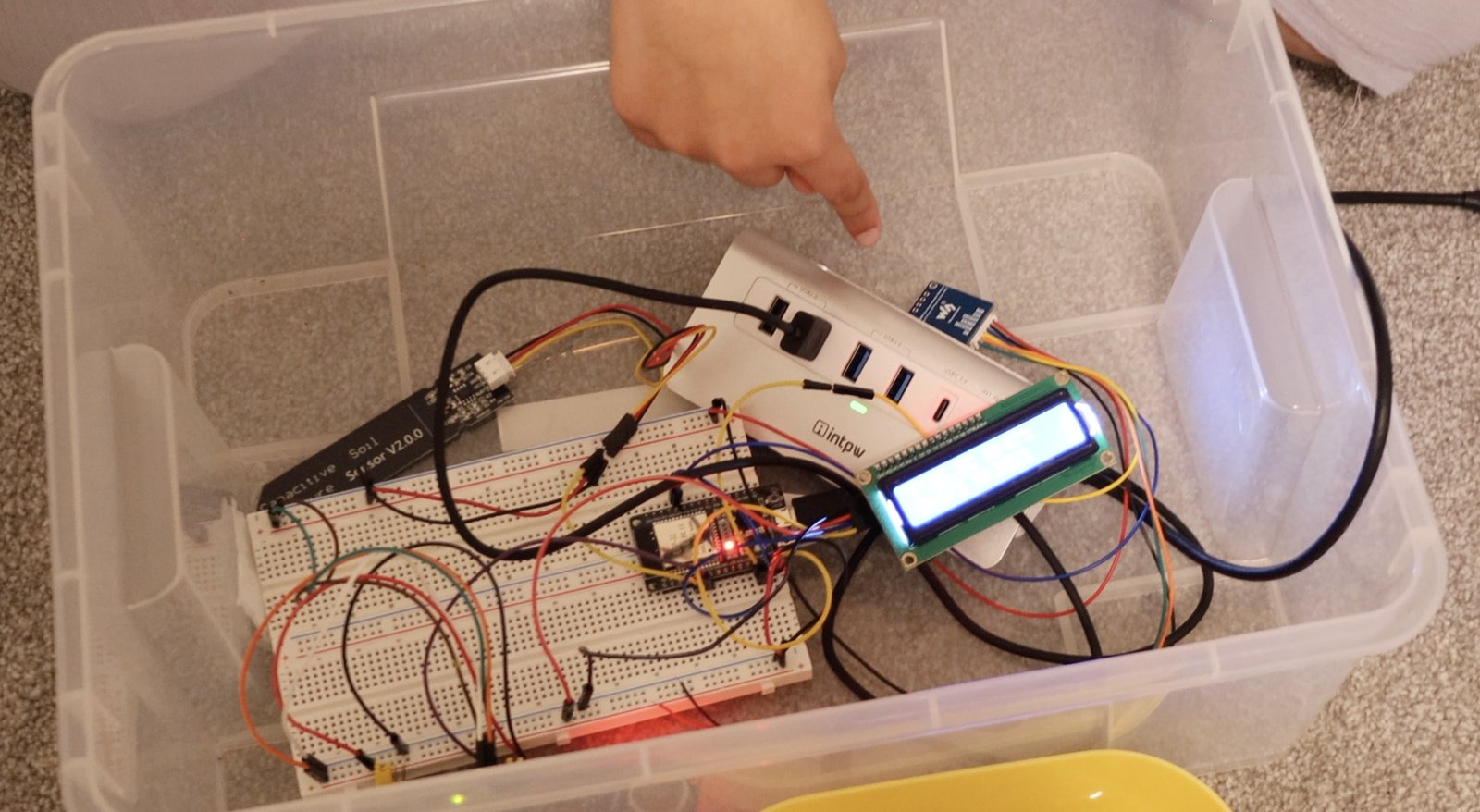
V5 is the version I’m using right now. It’s not perfect (see the LED debug saga for what I’m currently stuck on!). But compared to V4, it’s a different machine.
What changed from V4 to V5
| Piece | V4 | V5 | Why I changed it |
|---|---|---|---|
| Brain | ESP32-S | ESP32-S (Wi-Fi turned on!) | So it can send readings to my laptop instead of me writing them down |
| Gas sensor | MQ135 | MQ4 | Tuned for methane and the other reducing gases that spoiling food gives off |
| Humidity / temp | none | DHT11 | Microbes give off WATER as they grow, so humidity is an early signal |
| Moisture | none | Capacitive Soil Moisture Sensor V2.0 | A backup way to spot wet/spoiling produce |
| Alarm | red LED | red LED + piezo buzzer | Nobody actually stares at the LED. See the buzzer entry. |
| Power | USB direct | Wall adapter, bridge rectifier, 7805 regulator, clean 5V | No more random reboots when the MQ4 heater spikes |
| Display | 16×2 LCD (8 wires) | 16×2 LCD with I2C adapter (2 wires) | Saves a TON of jumper wires |
| Logging | by hand | SD card + Wi-Fi push every 60 seconds | No more notebooks full of scribbled numbers |
| Enclosure | bare breadboards | 3D-printed lid clip (still in progress) | So the experiment is repeatable |
The voltage regulator was the real win
For weeks in V4, my ESP32 would randomly reboot in the middle of an experiment. I assumed it was a code bug. Then one night I put a multimeter on the power rail while the MQ4 heater warmed up, and I watched the voltage drop from 5.0V down to about 3.4V every few seconds. That’s WAY below what the ESP32 needs to stay on. The heater was sucking too much current and starving everything else.
V5’s power section now goes like this:
- Wall adapter, 9V DC out
- Bridge rectifier (so if I plug the barrel jack in backwards, nothing burns up)
- 1000 µF smoothing capacitor (catches the bumps)
- 7805 linear regulator (turns 9V into rock-steady 5.0V)
- 100 µF + 100 nF capacitors right at each chip’s power pin (catches the smaller bumps)
No more brownouts. The MQ4 can spike all it wants. The rest of the system doesn’t even notice.
Wi-Fi logging
V5 sends a little JSON blob to a tiny webpage on my laptop every 60 seconds:
{
  "ts": "2026-03-01T18:14:00",
  "kohm_mq4": 31.4,
  "humidity": 61.2,
  "temp_c": 23.7,
  "state": "FRESH"
}
So instead of writing down a reading every two hours like I did with V4, V5 just keeps logging while I’m at school. The full dataset for every experiment now goes straight into a CSV file. Way more data, way less handwriting.
The actual parts list (so other kids can copy it)
This is exactly what’s on my workbench:
- ESP32-S AI-Thinker module (the big one)
- MQ4 Methane Gas Sensor
- DHT11 Temperature and Humidity Sensor
- Capacitive Soil Moisture Sensor V2.0
- 16×2 LCD with I2C adapter
- 5V active piezo buzzer
- Red and green LEDs (3mm)
- 7805 voltage regulator
- Bridge rectifier
- 1000 µF, 100 µF, and 100 nF capacitors
- Breadboard Power Supply Module (3.3V/5V)
- 0 to 9V power adapter
- 45W portable charger (for battery mode)
- Two mini breadboards stuck together (see the breadboard story)
- Male-to-female jumper wires (LOTS of them)
- Self-adhesive dots (for holding parts in place)
- Elegoo UNO R3 starter kit (for testing parts before they go on the real board)
What’s next
V6 is mostly going to be enclosure work: a real food-pantry-friendly housing with a magnetic lid clip, USB-C in, and a battery option so it doesn’t have to be plugged in. The electronics are mostly stable now. They just need a real home.
(Once I get that LED to actually light up, that is.)
- Sri